

Parsley, along with most other herbs, can be a bit tricky, especially when it comes to figuring out the right type to choose for each recipe and how to store it at home. This post is all about how to select and store parsley, in order to be able to enjoy it to its fullest.
(This post is an excerpt from The Produce Nerd’s Grocery Guide. You can learn more about the Grocery Guide, which covers this information for 55 different produce items, with input from 26 crop-specific companies HERE.)
What to look for when picking the best quality parsley?
- At the grocery store, you’re looking for bright green leaves that do not look bruised or wilted, and that smell like parsley.
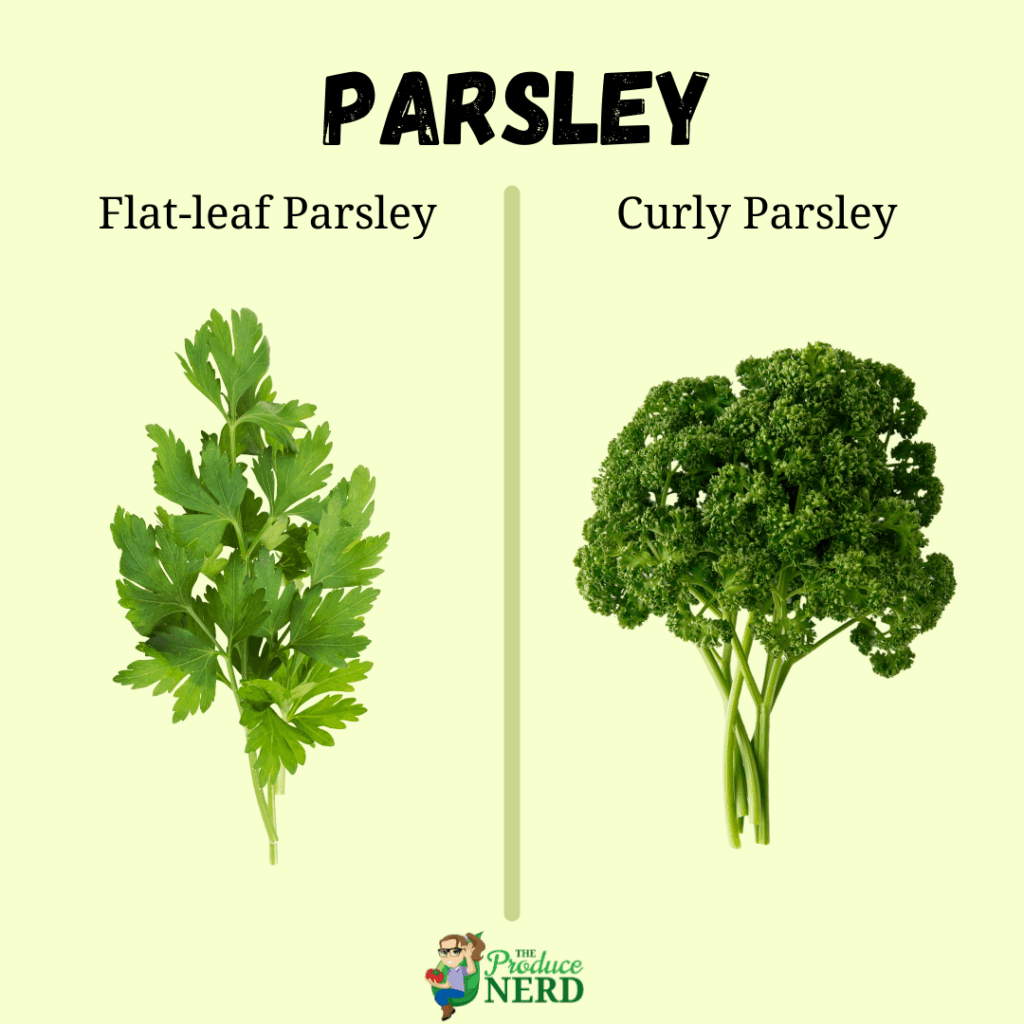
What’s the difference between flat-leaf parsley and curly parsley?
- Flat-leaf parsley has flat leaves, is green in color and has a stronger flavor.
- Curly parsley has a more curly shape to the leaves, is a little bit darker green, and does not have as much flavor in comparison to flat-leaf parsley.
Which type of parsley will stay good for longer?
- Flat leaf parsley wilts faster than curly parsley.
Common issues to avoid when selecting parsley?
- Wilted, damaged and/or yellowing leaves
- Visible insect damage
- Smell the parsley to make sure there are no off-odors
Are there any common issues that are specifically caused by bad grocery store handling?
- Grocery stores usually spray fresh produce with water to keep it fresh. Parsley is commonly found on these types of displays. While the water may be potable, these displays do not get cleaned often enough and can become a breeding site for pathogens. You can look around the display area for evidence of old produce debris that would indicate the display does not get cleaned very often.
What is the best way to store parsley at home?
- Parsley stores well in a glass or jar partially filled with water in the fridge. You should cut a bit off the ends and then place the bunch so only a few inches of the stem touch the water. Same with cilantro.
- You also want to make sure to store parsley away from any climacteric fruit you may have in the fridge, as exposure to the ethylene gas that the climacteric fruit gives off results in yellowing of the parsley leaves. (Some examples of climacteric fruit you may have stored in the fridge include apples, peaches, nectarines, pears, etc.)
Should you wash parsley before storing it?
- No, not for fresh storage. Just cut off a bit of the ends prior to placing it into a small amount of water for storage in the fridge, and then wash the parsley once you are getting ready to use it.
- Yes, if you are going to prepare the parsley for freezer storage.
Can you store parsley in the freezer?
- Yes. Parsley can be stored in the freezer without getting chilling injury. You just need to make sure to check the temperature on your freezer, because once it gets to 30F or lower, the parsley will experience chilling injury.
- Two common methods of storing parsley in the freezer include: washing, drying and chopping parsley and freezing it in an ice cube tray with a little bit of water, or storing it as a washed and dried bunch in an airtight container/bag in the freezer.
If you enjoyed this post, you might also be interested in: