
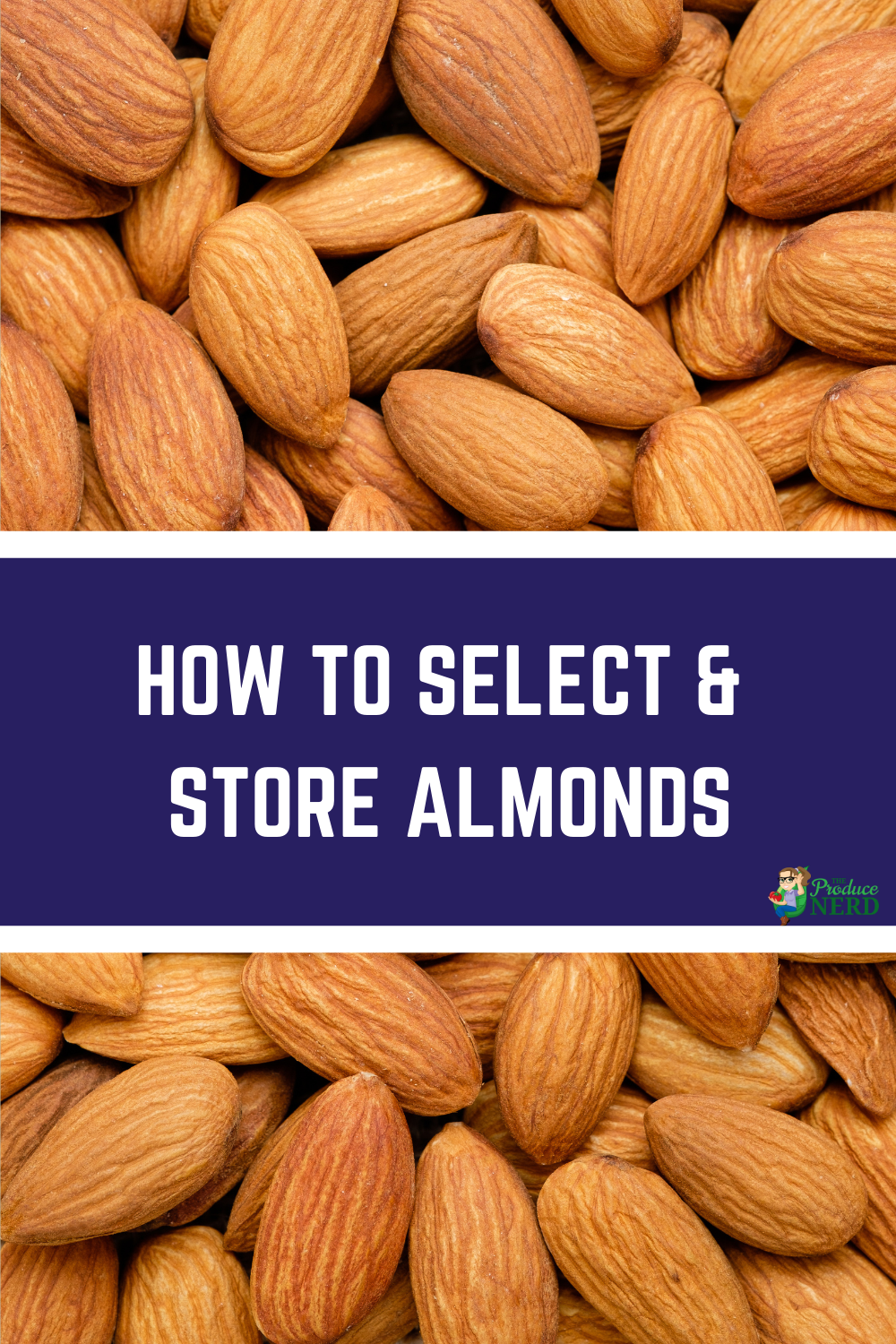
I swear, the more health books and research I read, the better almonds get! Almonds do many great things for the body and the brain, and come in so many different forms (e.g., almond flour, almond milk, roasted almonds, sliced almonds, etc.), that it’s hard to say no to these nuts! This post is all about how to select and store almonds, in order to be able to enjoy them to their fullest.
(This post is an excerpt from The Produce Nerd’s Grocery Guide with input provided by RPAC Almonds. You can learn more about the Grocery Guide, which covers this information for 55 different produce items, with input from 26 crop-specific companies HERE.)
What to look for when picking the best quality almonds?
- If the almonds are roasted, then the production date is more significant because the shelf-life generally drops off for roasted.
How to tell if almonds are fresh?
- You can tell by looking at the color, observing the nuts to make sure there is no visible pathogen growth, and you can smell the nuts to make sure there are no off-odors.
Common issues to avoid when selecting almonds?
- There are not too many issues. If the almonds are organic, look for California origin as there are zero bitter present with California origin, compared with European. Just one percent bitter can leave a really strong, unpleasant after taste.
What is the difference between raw vs. roasted almonds?
- Raw almonds have not gone through a heating process, while roasted almonds have (although, that doesn’t acknowledge whether or not the nuts have passed through a pasteurization step). There are two different types of roasting that almonds can experience: they can be dry roasted (no oil used during roasting), or oil roasted (oil is used during roasting).
- The roasting process gives the nuts a slightly darker color, crunchier texture, and a little bit stronger flavor and aroma.
What is the best way to store almonds at home?
- Ideally, airtight and in the refrigerator or freezer.
Are there any common things that consumers should look for not mentioned above?
- Almond butter quality varies depending on the quality of input stock. Look for brands with fresh almond butter taste. Keep in the fridge for a longer shelf-life.
What is your favorite way to eat and prepare almonds?
- Buy raw almonds at the store, coat in oil and salt (garlic salt and/or chili for more flavor), shake it up, put them in the toaster oven or regular oven and do a medium roast.
If you enjoyed this post, you might also be interested in: