
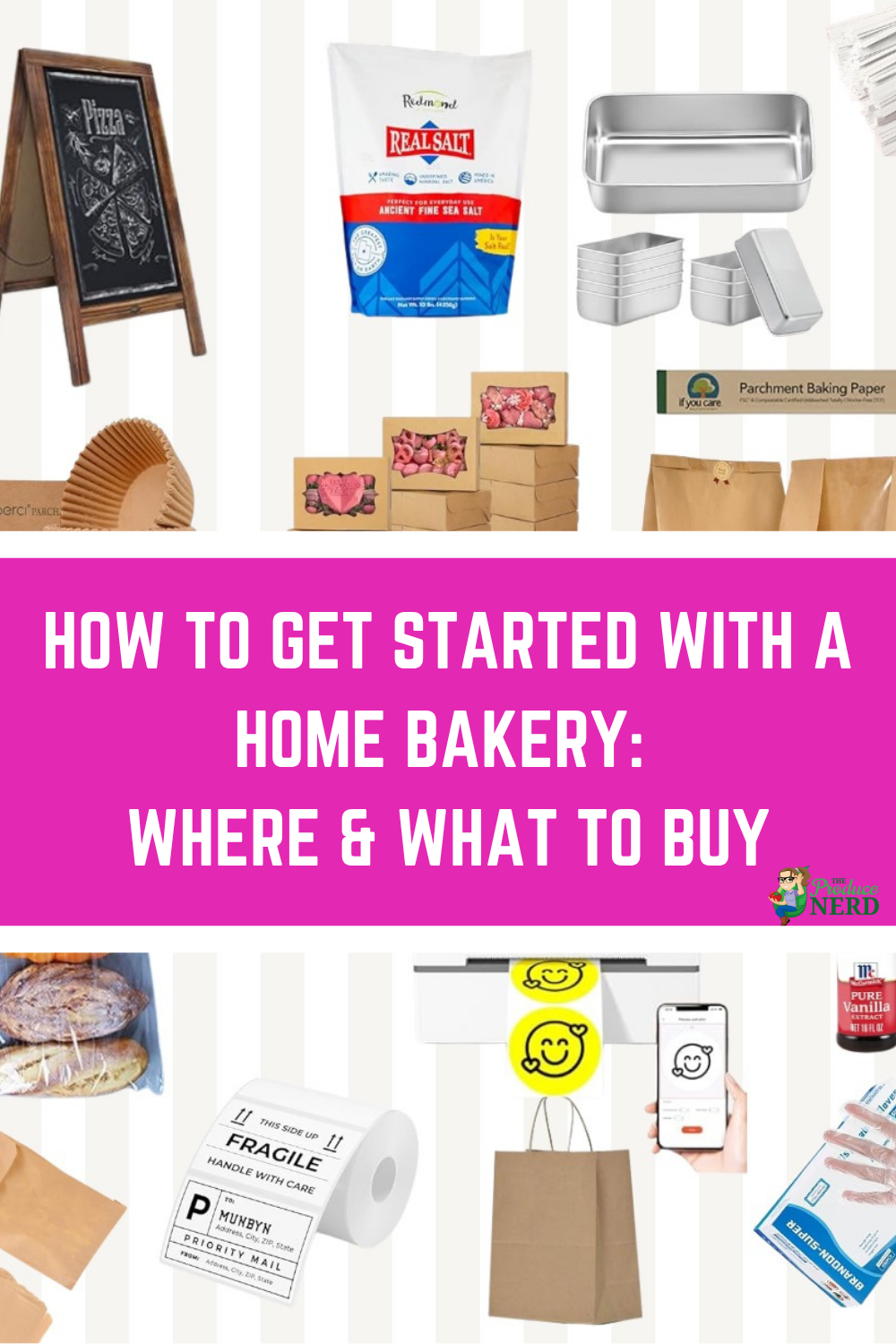
So you have started a home bakery, or are considering becoming a cottage baker, and are looking for what you need to buy and ways to buy in bulk (realistically speaking, to be able to store the supplies in your house), and to save a little bit of money on your ingredients so that you will be better compensated for all of your hard work! I was in this same boat after starting my home bakery, and went through the searching and testing of products to be able to find the best quality at the best price, and wanted to share my findings with anyone else who may be looking for the same.
(Disclaimer: This post contains affiliate links, which means I may earn a small commission if you purchase anything from my links, which will be at no extra cost to you. However, I only recommend products that I actually use and that have worked for my own home bakery.)
Table of Contents
I really believe in only feeding others quality ingredients that I would be okay with feeding my family. So, although the ingredients that I have found might be a little more expensive, I can feel better about selling them to others and can charge a higher price for them because my customers know they are getting a higher quality product.
Where to Buy Flour in Bulk
The flours that I use are bread flour to make sourdough, all purpose flour to make cookies, and oat and almond flour to make muffins (these are my gluten free options). This is how I source each one:
- Bread Flour – The best deal I have found is to buy King Arthur Organic Bread Flour from Sam’s Club. Where I live, I can get them for approximately $9/bag and can order multiple bags and have them delivered for free with my Sam’s Club Card. This is so convenient for me, and it saves me $3/bag compared to buying it from my local grocer.
- All Purpose Flour – You could go to a bulk grocer/wholesaler and get enriched all purpose flour in large bags for very cheap. However, that is not of interest to me. For the organic unenriched all purpose flour, I buy King Arthur All Purpose Flour that I still buy from my local grocer. I buy the 10 pound bag and since I don’t make nearly as many cookies as I do bread, I don’t go through these bags very quickly.
- Almond Flour – There are a lot of bulk options online, but I have honestly not found a better price than what is offered from my local grocer (H-E-B), with a 4 pound bag costing $20.
- Oat Flour – There are two options here: you can either buy oat flour or you can buy old fashioned oats and blend them down into your own oat flour. If you are in need of gluten free oat flour, you either need to blend down gluten free oats or buy gluten free oat flour. However, if your customer doesn’t care one way or the other, your cheapest method is to buy old fashioned oats in bulk (Sam’s Club, again, has a great deal on these), and grind them down in a food processor or blender of some sort (I use my Vitamix!). The price difference between oat flour and the old fashioned oats in bulk is outrageous.
Where to Buy Home Bakery Ingredients in Bulk
Sam’s Club wins out for most of these bakery items. I have compared the prices and sizes to my local grocer, Amazon and many other options, and almost always, Sam’s Club wins! And, the best part about Sam’s Club is that with their card, you can get free deliveries and free pickup, where you don’t even need to go inside the store to go shopping!
Here are the home bakery ingredients that I commonly find the best deals on at Sam’s Club:
- Sugar
- Cocoa Powder
- Chocolate Chips
- Baking Soda
- Baking Powder
- Corn Starch
- Maple Syrup (including the 100% pure maple syrup)
- Honey
- Avocado Oil
- Butter (including for grass fed butter)
- Eggs (including for cage-free eggs)
- Vanilla Extract (they have a comparable price to Amazon, although at the moment, Amazon has a little bit better deal, so if you are a Prime member, I would take advantage of that!)
The few ingredients I prefer to buy from Amazon are:
- Salt (The 10 pound bag is a great price compared to the smaller sized bags, and they are known to have some pretty great sales every so often)
- Vanilla Extract
- Cinnamon
- Brown Sugar (I like the organic brown sugar, with no additional ingredients, which seems all but impossible to find in bulk, so I just buy normal sized bags on Amazon)
- Powdered Sugar (I prefer the organic one with tapioca instead of corn starch as the second ingredient)
Where to Buy Bulk Packaging
For bulk packaging for a cottage bakery, I also like to source from Amazon because you can do bulk, but you don’t need to do crazy bulk to where the items cannot fit in your home. Some of my regular go-to orders are:
- Muffin Liners – These unbleached liners work great, they don’t leave any weird greasy residue, resemble the ones made by the “If you care” brand, but are significantly less expensive.
- Cookie / Muffin Bags – These ones are the best quality ones I could find. I tried to avoid plastic, and these still do leave a bit of oil marks, but not as much as some of the others. I can comfortably fit two muffins into these bags, or probably 8 smaller-sized cookies.
- Tortilla Bags – I make small tortillas and live in Texas, so my bags need to have perforation, and these work for that. You could also use these for bulk cookie purchases, or if those buyers would like plastic instead of having to worry about the oil of the brown bag.
- Cookie / Muffin Boxes – These work great for selling in bulk – either 6 muffins per box, or, I can fit up to 16 small/medium sized cookies in the box. In the packs of these boxes, there are also different window designs, so it’s a nice little switch up every so often for you and for your customers!
- Bags for Sourdough Sandwich Loaves – These are the only bags that I can use when I sell outside in the heat in Texas. And, to be honest, regardless of whether it is super hot or not, the temperature and humidity change just while outside for a few hours can cause a lot of moisture build up in bags if they don’t have holes in them. These bags do have holes in them (they are perforated). When selling outdoors, I keep the bags open and only seal them up with a twist tie when someone purchases one. If kept closed, these bags will have a little bit of moisture build up when selling outside, but nothing compared to other options I have tried.
- Bags for Sourdough Artisan Loaves – These bags are awesome! My only comment on these is to make sure and keep them open open on display, as well. They might look prettier folded up at the top, but that’s just another way for moisture to build up.
- Cups for Juice / Granola – These cups come with lids and work great to sell fresh squeezed juice, or granola. I was initially selling granola in smaller containers, but I couldn’t find a container that was the size I wanted, and that was also easy to open and close. These cups work for the granola, and now, I just sell it in larger sizes and put the label sticker on the lid over the straw hole. My husband thinks I’m nuts, but no one has complained and people now buy more granola when sold in these containers, than when I had them in a more “appropriately” sized container prior.
- Twist Ties – The tortilla and sandwich loaf bags come with their own twist ties, but they are golden and shimmery and I don’t really like them. So, instead, since these are super cheap, I buy these ones and use them as the twist ties on my packaging instead.
- Gloves – For handling food, if you don’t have everything pre-packed ahead of time, these work.
- Brown Bags – These are the best brown bags with handles I have found that can fit 3 sourdough sandwich loaves, or 2 sourdough artisan loaves. If you are doing larger orders and are selling cookie/muffin boxes, these other bags would be a better fit for you (although they do not have the handles).
Where to Buy Pans to Bake Sourdough in Bulk
There are two different types of pans to use if you are baking both artisan and sandwich loaves. For these two, the following are my go-to pans.
- Challenger Bread Pan – This is the only pan I use to bake artisan loaves. They come out perfectly and without a burnt crust on the bottom. (If you want to learn more about it and/or see how I use it, you can check out my full review post on the pan HERE.)
- Loaf Pans – These are the exact ones I use. I get the medium size. I do have to use parchment paper to line them each time since they are non-stick, but it doesn’t matter because I won’t use non-stick pans for my family, which means I will also not use them for my customers. And, once you figure out how to do the parchment paper, it becomes easy and just one more step to the process. Also, when ordering these, keep in mind that for the majority of the baking time for the sourdough sandwich loaves, one of the pans needs to be covering the other. With that, you don’t need to think in terms of having two pans per loaf. You need to know how many loaves can fit in your oven at one time and have enough extra lids to cover those. For example, I have 30 sandwich loaf pans, and I like how my bread comes out when I bake 8 at a time in the oven, which means that I can only fill 22 loaf pans to have enough lids to cover. Or, in this instance, you could also fill 26 loaf pans and then use 4 lids to cover the first bake, and then 8 for the next 3 bakes. It is all dependent on the time and money you want to spend!
- Parchment Paper – I have seen people showing different parchment paper methods they use for the two-pan method, and have tried most of them, but it all comes back to me buying this regular unbleached parchment paper and folding it up into the pans. The ones with the slits allow the dough to seep out in the corners and get stuck, and then you can ruin a loaf trying to get it out of the pan!
The Best Label Printer to use for my Home Bakery
- Mumbyn Label Printer – This is the printer I use. Do not be fooled by the people who buy the printer labels and use them on their home printer to be fancy. If you do that, you’ll never make any money of your baked goods! The Mumbyn label printer is super economical for the use it will get, and you can easily switch between different sized labels. You can customize labels on their app/website, and/or you can go and use Canva (or a similar app) and create your labels there are upload them to the Mumbyn app/website. I prefer to use Canva, and I use both the 2″x2″ labels, and the 3″x2″ labels. The 3″x2″ labels seem to fit the extra lengthy cottage label requirements that are required of my goods here in Texas.
Frequently Asked Questions
How do I make my own oat flour?
If you have a food processor or a Vitamix, just blend up old fashioned oats until they turn into a powdered texture. I have not tried to do this in a blender, but if that’s all you have, it’s definitely worth a try!
Where should I buy to increase my margin on my home baked goods?
Look at big-box wholesalers in your area, like Sam’s Club and Costco for the bigger bulk items, such as flour and maple syrup and sugar. For packaging and other random items, Amazon is a great place to find items in bulk, but not in too much bulk that they won’t fit in your house!
What type of bread bags work the best in a humid environment?
You have to get bags that are perforated. I had seen videos showing how people used these tools to perforate their bags and tried that, and it didn’t work for me with this nasty Texas humidity and strong sunshine! The only plastic bags I have found to work for sourdough are the LESIBAGs. With that said, I still keep all of the bags open when selling outside and don’t twist tie them shut until someone purchases them.
How do I keep my bread bags from getting moist on the inside?
A few suggestions: keep your bread bags open while selling (especially if you’re selling outside), try to keep out of direct sunlight, and most importantly, use perforated bread bags! I prefer the LESIBAGs.
Which parchment paper works the best for lining sourdough sandwich tins?
I prefer the If you care Parchment paper for a few reasons: it is actually non-stick, you can reuse it for maybe 3 bakes, and once you learn how to fold it in your tins, your loaves come out looking great, and you don’t have to worry about having issues with the loaf when taking off the parchment paper at the end of a bake.
What’s the best signage to use as an outdoor vendor?
I bought this chalkboard sign, and I love it! I sell on a street corner near a golf course, and I put this out on the corner and it works great. I have also been using this when it starts to rain, and the only thing I had to do was wipe it off when the rain stopped, and then I was able to re-write on it and everything worked and was great! I was also worried about it maybe starting to rust, but no issues arose regarding that.
What display case should I use to display my baked goods outside?
For this one, you need to be careful because most are super expensive, need to be refrigerated and aren’t practical for an outdoor setup. I found a small one that works for me, but again, with this weather here and depending on what I put in the case, I sometimes need to leave the display case door open because moisture starts to build up. (I think it’s mainly my fruit muffins that cause this.) I think the perfect unrefrigerated one that is practical for selling outside without hookups would be one like this one, but with a screen door instead of a hard plastic one that seals shut with a magnet.
How to calculate my cost of goods sold (COGS) and how much I should price my baked goods for?
Use ChatGPT, or whichever AI program you prefer! As long as you have your ingredients list, the cost of the different items per weight (or whatever the unit of measurement is), the amount of time it takes to make, and the labor amount per hour, ChatGPT will do all the rest for you! To be quite honest, ChatGPT does a great job at calculating COGS, but sometimes gets a little crazy with pricing out items, so make sure to really look those over and think about it before deciding on your final prices to sell your baked goods for.
I hope this guide was helpful for you! If you have any additional questions not covered here, please include them in the comments section below.
Here are some additional posts that may be of interest to you:
Yes one of the most tasting food is baked coconut tart we truly love them and this is the only reason why we would start a home bakery