
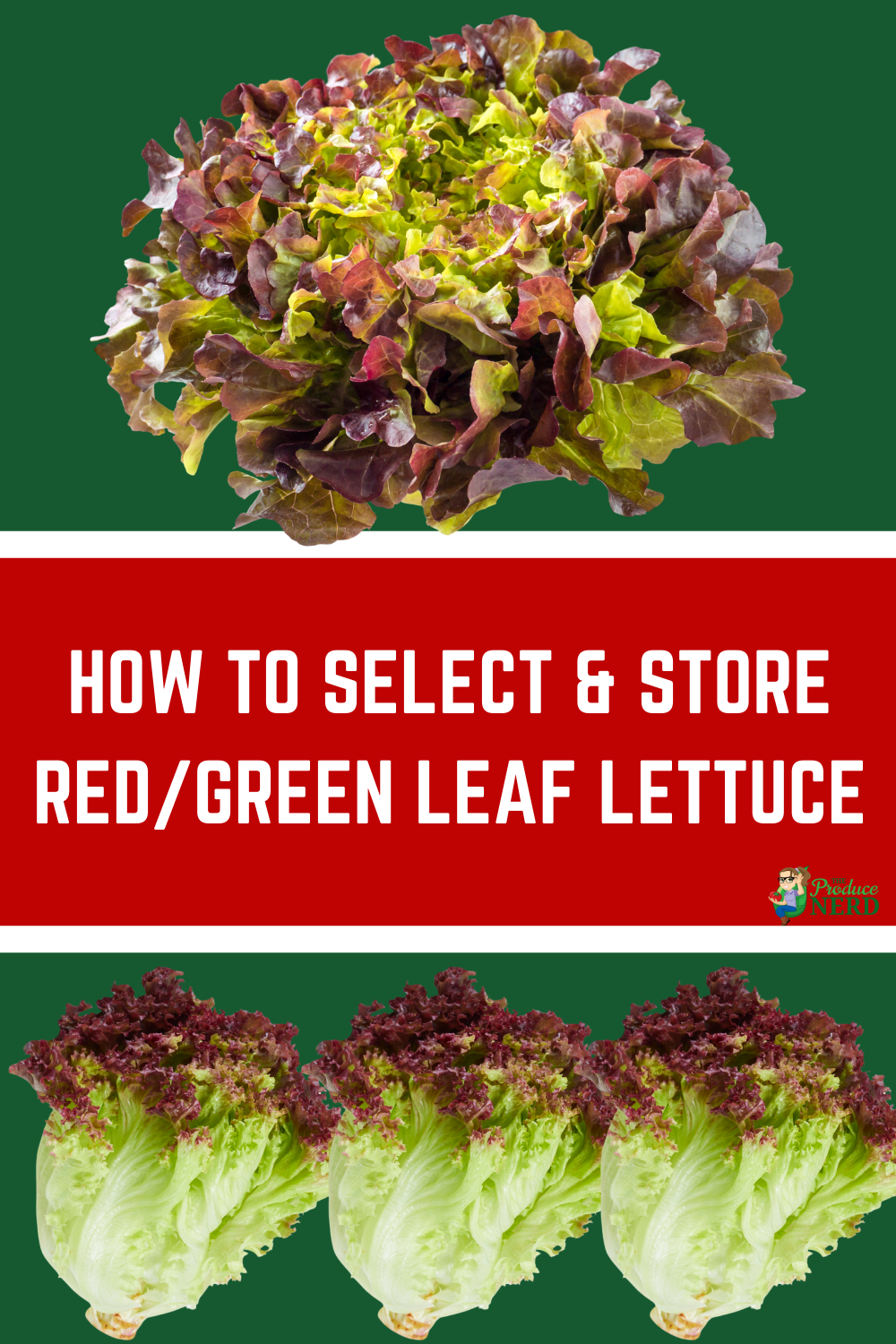
It’s not iceberg or romaine, but it’s the other leafy lettuce in the wet rack at the grocery store! You are curious, but aren’t sure. However, after reading this post, you will easily be able to buy, store, and consume these delicious greens without hesitation! This post is all about how to select and store red leaf and green leaf lettuce in order to be able to enjoy them to their fullest.
(This post is an excerpt from The Produce Nerd’s Grocery Guide. You can learn more about the Grocery Guide, which covers this information for 55 different produce items, with input from 26 crop-specific companies HERE.)
What to look for when picking the best quality leaf lettuce?
- These are easier to inspect at the grocery store since they are usually not individually bagged. The leaves should be dark in color and avoid any yellowing in the leaves.
Common issues to avoid when selecting leaf lettuce?
- Because these are not usually individually bagged, they may have more marks or bruising on the leaves from being packed in a larger box and then handled again at the grocery store. These should be only on the outside leaves; inner leaves should not show these marks.
Are there any common issues that are specifically caused by bad grocery store handling?
- Grocery stores usually spray fresh produce with water to keep it fresh. Red leaf and green leaf lettuce is commonly found on these types of displays. While the water may be potable, these displays do not get cleaned often enough and can become a breeding site for pathogens. You can look around the display area for evidence of old produce debris that would indicate the display does not get cleaned very often.
What is the best way to store leaf lettuce at home?
- It’s best not to store your leafy greens wet. Storing them wet will shorten the shelf-life considerably. You should wash them just before consuming; if you must wash them as soon as you get back from the grocery, ensure that they are completely dry (salad spinners are handy here) and place a clean paper towel in the bag with your leafy greens to absorb any moisture.
If you would like to learn more about lettuce, different types, and how they are harvested and packed, you might be interested in the following: