

You can find green pears, yellow pears, or reddish pears, and although they look different, they all act the same! Pears are a delicious fruit, and especially a great switch up with apples during the winter months. You just need to learn how to ripen them, be patient and store them properly! This post is all about how to select and store pears in order to be able to enjoy them to their fullest.
(This post is an excerpt from The Produce Nerd’s Grocery Guide. You can learn more about the Grocery Guide, which covers this information for 55 different produce items, with input from 26 crop-specific companies HERE.)
Table of Contents
How to Select Pears
What to look for when picking the best quality pears?
- You can determine whether a pear is ripe based on its firmness. If a pear is soft to the touch, it is ripe. However, pears are rarely sold ripe these days, so you can buy a pear that is firmer and ripen it on the counter at home.
Common issues to avoid when selecting pears?
- Bruising
- Blue/grey mold
- Any visible marks (e.g., fingernail marks)
Do you select different types of pears the same way?
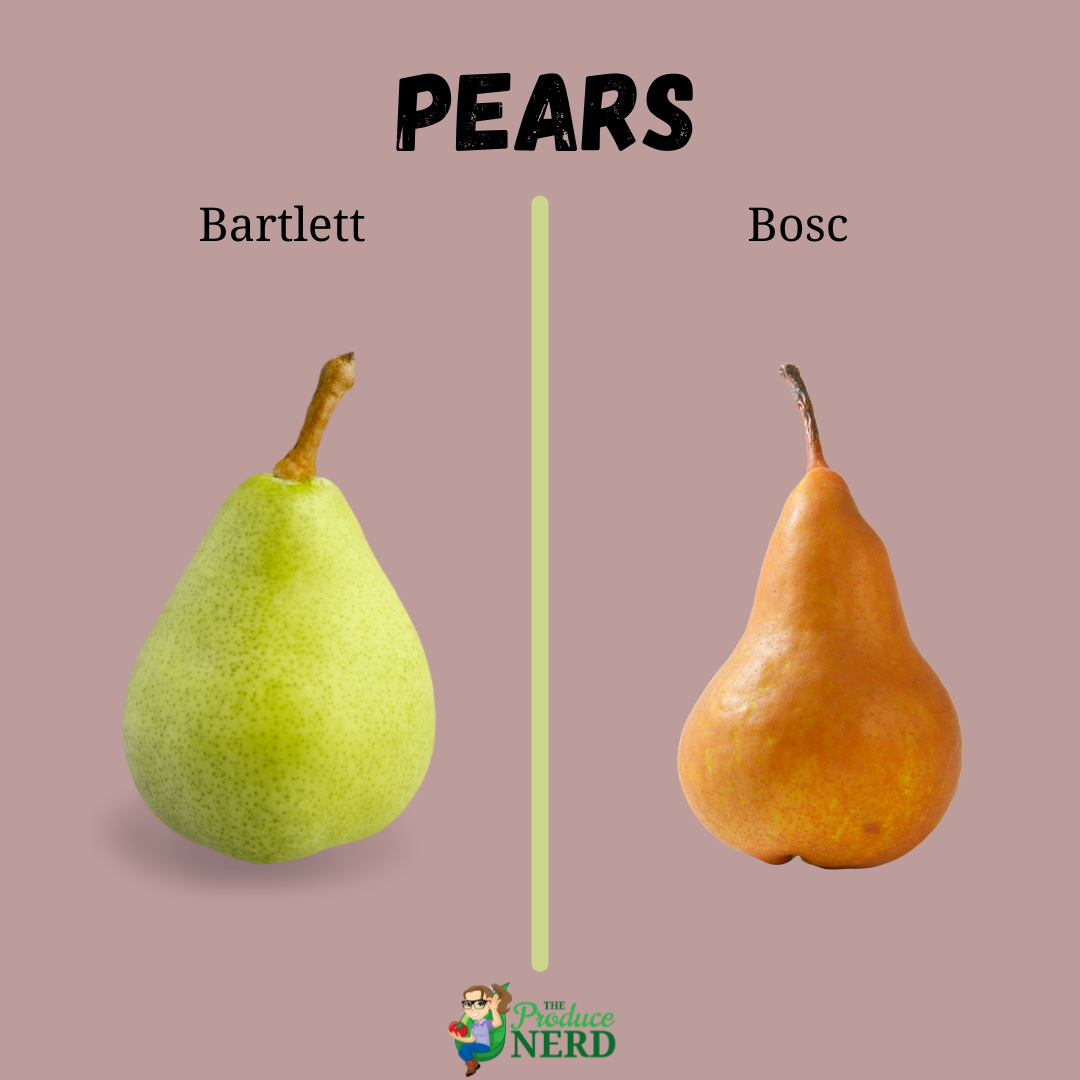
- Yes. Regardless of whether it is a Bartlett or Bosc pear (the two most common on the market), you will be looking for the same things, although they differ a bit in color and shape. There are additional types of pears on the market as well, and you will select them the same way.
What’s the difference between Bartlett and Bosc pears?
- Bartlett pears are green/yellow in color, have the typical pear shape, and are harvested when they are still hard (after having reached a specific maturity stage) because they turn mealy if they are ripened on the tree.
- Bosc pears are light brown in color (you can almost see the lighter color underneath it), have more of an hourglass shape to them, and are also harvested before fully ripening on the tree.
How to Ripen Pears
How do you ripen pears?
- Just like with other climacteric fruit that continues ripening after harvest, pears can be ripened on the counter. If you put them in the refrigerator, their ripening will essentially be put on hold and they will stay hard until they are in warmer temperatures, like on the counter.
- Pears are one of the fruit that typically do take longer to ripen, so you can either set them out on the counter and be patient, or place them on the counter with other ripening fruit (e.g., bananas, apples, avocados). All of the ripening fruit gives off ethylene gas during the ripening process, which leads to them all ripening faster!
How to Store Pears
What is the best way to store pears at home?
- This will be dependent on their ripeness stage. If you buy a pear already ripe, you should store it in the refrigerator. If you buy a pear that is still not ripe (based on its firmness), store it on the counter to ripen and then eat it or put it in the refrigerator once it has reached your preferred ripeness (firmness) stage.
How long do pears last for in the refrigerator?
- Pears can last for months, as long as they haven’t been ripened yet. So, if you plan on waiting to eat the pears you purchased, put them in the refrigerator before you ripen them, then take them out to ripen a few days before you are planning to eat them.
- You also have to remember that based on where the pears were grown and what time of year it is, that the pears might have already been in cold storage for some time prior to making it into your kitchen.
When are pears ready to eat?
- You can test the ripeness with your hand. You just need to slightly push into the flesh of the fruit, and if it gives a small yield, it is ready to eat. However, you can always let the pear get a little bit softer/riper before eating it as well.
What is your favorite way to eat and prepare pears?
- I prefer to eat pears fresh, by themselves!
If you enjoyed this post, you might also be interested in: