How Cherries Grow
Cherries grow in large clusters on trees, with the size of the crop depending on how many blossoms set (starting as early as February in California) and the weather that follows through harvest. Cherries are non-climacteric, meaning they stop ripening the moment they are harvested.
Most U.S. sweet cherries come from California, Oregon and Washington, with Michigan known for tart cherries. When cherries aren’t in season domestically, store shelves usually shift to imports from Chile (November–February) or Argentina.
What Causes Double Cherries?
A double cherry is two fused cherries; when one full cherry is connected to a small, raisin-like fruit, it’s called “spurring.” Both are perfectly safe to eat and taste just like a regular cherry. Fruit doubling is caused by environmental stress — specifically, if summer temperatures climb above 86°F (30°C) while next season’s flower buds are forming, it can lead to double fruiting. Some cherry cultivars are more prone to it than others.
Double cherries and spurs aren’t common at traditional grocery stores, since most get sorted out during packing and sent to secondary markets like produce markets and farmers markets. If you come across one, you can still use a cherry pitter — just remove the doubled portion first so there’s a single seed.
How Cherries Are Harvested
Cherries are picked by hand. Since a tree doesn’t ripen all at once, workers often make several passes over a few weeks, checking each cherry’s sugar content and skin color before picking. Harvested cherries go into buckets, then are gently weighed and dumped into field bins to avoid bruising.
How Cherries Are Packed
From the field, bins travel to the packinghouse, where they’re brought in by forklift and dumped into sanitized water. From there:
- Separating clusters – Cherries are harvested in bunches, so cutters separate them into individual fruit.
- Hand sorting – Workers check for decay and splits as the fruit moves down the line, with brushes rotating each cherry so no side gets missed.
- Hydrocooling – A cold water bath brings every cherry down to the same ~32–34°F temperature to remove field heat.
- Optical sorting – Fruit is sorted by size and checked once more for defects.
- Bagging & boxing – Cherries are bagged and boxed.
- Quality control & palletization – A final weigh-check confirms everything meets specifications before boxes are palletized and sent to the cooler for transport.
How to Select Cherries
- Look for firm cherries with green stems still attached — brown, shriveled stems mean the fruit is older (still fine to eat, it just won’t last as long).
- Check for splits or openings in the skin, which is where decay tends to start first.
- Scan the whole bag before buying, and take another look once you’re home — a bag with a couple pounds of cherries commonly has at least one starting to turn.
- Buy from a well-refrigerated display; cherries that sit out too long won’t hold up as well once you get them home.
How to Store Cherries
- Keep cherries in the refrigerator.
- Cherries are one of the few fruits worth washing as soon as you get home rather than right before eating — it lets you spot and remove any bad ones early, before they spread to the rest of the bag.
Ideas for How to Prepare Cherries
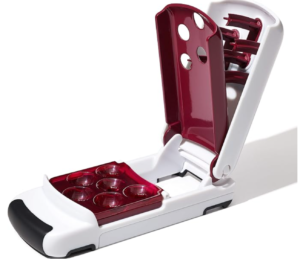
Fresh, straight out of the bowl, is my favorite way to enjoy cherries. And, if you have little ones, you are going to want a cherry pitter (it will also make it easier to bake with them as well)!
Here’s the one we have been using for the last few years: